

Why CTOs are making AI testing a 2026 priority

Dmitry Reznik
Chief Product Officer

Summarize with:
Recall the last time you were using the simple app. Like a calculator, with only a couple of buttons (and, in general, a plain interface), two basic functions, and an invariant result. You couldn’t, innit?
Because even software with the most obvious goal and core function is becoming more complex. So is software testing and, hence, QA strategy.
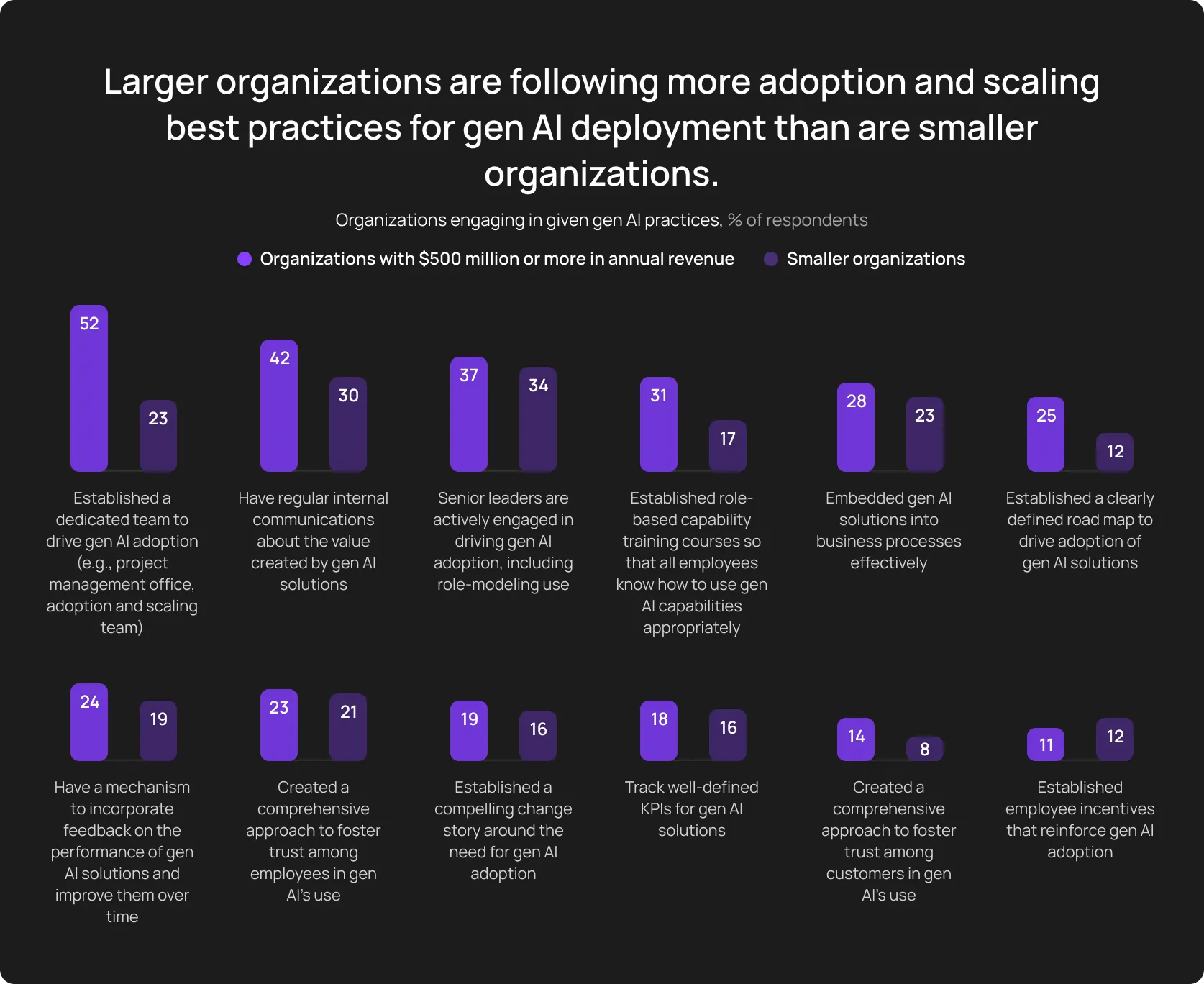
While larger companies are adopting AI solutions faster, the trend is indisputable: artificial intelligence will definitely impact the future of software testing, from coverage to sophistication and ensuring scale.
One of the characteristics that pushes this fast adoption is the velocity of modern software delivery. In far 2014, Amazon deployed 50M updates a year. A bit more complex and faster than traditional release cycles, right?
Legacy QA pipelines can’t keep pace: they buckle under volume, crumble under dynamic complexity, and curb innovation. That’s why autonomous end-to-end testing is becoming a cornerstone among CTOs’ QA priorities.
Below is a strategic-level text grounded in why tech-savvy CTOs are including AI testing in 2026 roadmaps, how they address cost, speed, talent, and observability challenges.
The pressures pushing QA to the top of the CTO agenda
We are all now seeing a broad shift: successful businesses are already using modern tools and technologies (among others, AI) to enhance customer experience. Intelligent navigation in modern drones, Ukrainian DiiaAI assistant on the government portal, Airbnb’s AI-enabled search — you can recall oodles of such examples. Following the same logic, CTOs want their QA to become context-aware, adaptive, predictive, and more.
Accelerating release velocity
QA shouldn’t be the bottleneck in CI/CD pipelines:
- Flaky regression scripts trigger break/fix cycles in staging
- Regressions that once took hours now drag into days and, this way, constantly postpone releases
- Feature delays because QA becomes a blocker
With such an approach, there is nothing groundbreaking in losing revenue, poor launches, and frustrated stakeholders.
Talent shortages and burnout in QA
Quality assurance professionals have one of the highest burnout rates across all specializations. It seems to be becoming endemic.
QA roles rank fourth in the burnout disciplines list. They suffer from performance anxiety and growing pressure to automate. Turnover is high, and it’s difficult to replace skilled testers without lowering the project’s effectiveness. This, in turn, amplifies a business risk as legacy systems continue aging.
Rising risk from integration-heavy systems
APIs, embedded AI components, third-party services, and microservices demand system-level QA, but many companies still use just localized UI or unit tests. Even if they are mature enough for a “classic” (scripted) test automation, the system still fails without service virtualization or dependency-aware design.
Cut costs but save the quality tasks
We can’t help admitting that CTOs are under pressure to improve the margin. Modern business owners understand that the tech part of the business is one of the shortest ways to make more money.
Especially when it comes to optimization. And unfortunately, QA strategy often becomes a sacrificial lamb. On the contrary, sustainable QA means investing a lot: in automation, in scaling QA with AI, in tech-savvy engineers, and many other things.
Why AI testing is now enterprise-ready
As we’ve already seen, enterprises adopt artificial intelligence much faster than SMB. But there are way more interesting conclusions, particularly revealed in McKinsey’s Technology Trends Outlook: the world steps into the era of autonomous systems and new human-machine collaboration models. So, this is clear: Enterprises certainly understand that early adoption of modern approaches and tools determines the leaders for the next decades.
Tools are smarter, not just faster
Common prejudice among experienced CTOs is the unreliability of AI tools. But modern AI test automation delivers beyond speed. It implants self-healing locators, risk-based prioritization, and analytics-driven test optimization into CI/CD to learn over time and correct itself, eventually refining execution strategies and turning maintenance into a background function.
Setup and adoption are easier than before
This is what we call AI testing in 2026 — when anyone can contribute to the tech part of the business, no matter how deep their tech knowledge is.
OwlityAI, for example, doesn’t require QA experience. Low-code interface, cloud-native runtime, and seamless CI/CD integration — you don’t need weeks of architecture planning.
Suits fast-growing startups and global techies
The best of both worlds: The same AI test frameworks handle shift-left automation in SMBs and scale to enterprise complexity. The system will grow with the product and enable leaders’ mindset shift.
AI testing delivers tangible ROI
AI reduces regression runtime and triage burden, and some teams see ROI even in weeks. They sprint from 20-hour regression cycles to under 4 and reduce maintenance overhead by 60-70% at least.
What CTOs gain by prioritizing AI testing now
What would software development look like in a progressive SaaS? Every build automatically runs through an adaptive QA pipeline, the system validates cross-service integrations and updates itself as APIs evolve. Engineers ship confidently, product managers iterate faster, and the CTO can finally measure quality outcomes in business terms, not in Excel spreadsheets. Well, this imaginative picture is real, in companies where CTOs leverage AI in QA.
Faster releases
Traditional regression cycles can consume 30-40% of sprint time. Autonomous test generation and self-healing halve this (to say the least). They eliminate brittle scripts and update flows on their own. Many companies shave weeks off release cycles after adopting AI-driven regression coverage.
A more productive and scalable QA
When you started the AI adoption and got the first wins, you’ll encounter another challenge: Scaling. QA with AI, even if implemented in small businesses, can now achieve enterprise-grade coverage.
Of course, here are some caveats. SMBs have fewer opportunities to gather high-quality data to use AI to its full potential. But there is synthetic test data that mirrors production traffic for this reason, so even a team of five can simulate conditions previously requiring dozens.
Test visibility
Clear-cut dashboards correlate defects with business KPIs. Inspect how software testing impacts release adoption, churn reduction, and uptime SLAs. Instead of green/red unit test bars, top tech executives see how much user journey coverage is automated and what percentage of bugs escape into production.
Use these quick wins to put AI into CTO QA priorities.
Competitive advantage
Product-led markets are gaining ground. Now, SaaS projects in the US, for example, fight for about USD 177/month of the average user subscription budget. If you release 20% faster than competitors, the chance to capture outsized market share in SaaS verticals is higher, and artificial intelligence is one of the few levers that delivers this velocity.
What to look for in an AI testing solution
AI test automation begins with well-defined goals and a thorough audit. Then, continue with a properly chosen tool. The difference between hype and lasting impact is in the practical fit for modern architectures and QA workflows. Let’s see what to look for in an AI testing solution before you waste your budget.
Effortless and clear onboarding, intuitive usage
Prioritize tools that integrate into your CI/CD in under a week. Low-code test design and natural language authoring remove bottlenecks for non-techies and keep customization options for advanced engineers.
Cross-platform capabilities and API-first architectures
The ideal option must natively support REST, GraphQL, gRPC, and event-driven microservices. Ditch those with just front-end click paths. Failure here results in QA blind spots where most critical outages arise.
Real-time analytics and shareable dashboards
It’s essential to demonstrate results and so-called quick wins to management, especially when it comes to something new and not fully trusted. Detailed analytics ensures this observability, and dashboards are just the most convenient format for presenting data for most users.
Tools should provide visibility into which scenarios are covered, which tests are self-healing, and where coverage gaps are.
Built-in scalability
AI testing tools that require heavyweight on-prem infrastructure or large DevOps overhead don’t do SMBs any favors. Honestly, they do nothing for anybody. Prioritize vendors that scale elastically with workload spikes during major release cycles.
How OwlityAI supports CTO-level QA priorities
OwlityAI embeds intelligence directly into QA pipelines, enabling CTOs to:
- Launch AI-powered testing quickly (into existing CI/CD) with low-code setup
- Scale testing without hiring
- Ensure visibility into test performance and coverage with dashboards (we are updating them, stay tuned)
- Reduce QA costs with self-healing and other features
Bottom line
When we are thinking about the future of software testing, the most common things that pop up in mind are automation, security protocols, higher impact on business outcomes, and lowering the entrance barrier.
This is what AI testing in 2026 is about. But it’s clear that many CTOs consider artificial intelligence a long-lasting technology impacting their work and their mindset.
If you are ready to shift your understanding and improve your testing process, book a demo with our expert. Let’s level up your product’s quality.
Monthly testing & QA content in your inbox
Get the latest product updates, news, and customer stories delivered directly to your inbox