

How to reduce QA debt with a smarter, AI-driven strategy

Dmitry Reznik
Chief Product Officer

Summarize with:
The last CISQ’s report estimated the cost of poor software quality in the US at USD 2.41 trillion, and accumulated software technical debt at roughly USD 1.52 trillion.
Among other insights, developers found out that they are not alone — all devs are spending about a third of their time trying to reduce tech debt. To make it not grow, to be more precise. Because to reduce it, you should take completely different actions. For example, through intelligent test maintenance.
Another side of this problem is QA debt. It also slows teams down, but it’s far harder to spot because it hides inside brittle test suites, noisy pipelines, and false confidence from “green” builds.
Many teams have started the automation, yet their test scripts break with every change, manual rework clogs them, and blind spots don’t let them progress in reality.
The World Quality Report 2024-25 urges an AI-led QA strategy with a key suggestion — GenAI should augment, not replace, skilled quality engineers. But at the same time, many surveyed pros said their companies don’t consider quality engineering as a strategic initiative. Nonsense.
This article shows how to recognize QA debt early and reduce it with a smarter, AI-driven strategy.
What is QA debt, and how it is holding your team back
QA debt is a pile of little inconsistencies that make your testing process slower and less efficient over time. Like your kids’ room. They mount up clutter for weeks, and it becomes harder to find what they need (and, sometimes, to find the exit at all).
More relevant example. You’re working on a software project, and there is a series of tests that check if everything is working correctly. If you have some tests that constantly fail but you never fix them (that’s like keeping that muddle in the kids’ room), it will take extra time to sort through them when you’re trying to run your suite.
Additionally, if you have many old tests that are no longer relevant, they will also slow you down because they add unnecessary steps to your testing process.
This way, QA automation debt becomes a hidden tax: every regression slows, every false positive wastes time, and structural instability becomes routine.
The definition of QA debt
It’s the technical liabilities in your test infrastructure. These ones:
- Outdated tests for deprecated functionality or UI elements no longer in use
- Flaky automation
- Insufficient automation: manual steps and checks that are still in automated pipelines
- Multiple tests validate similar flows
- Test blind spots in critical paths
These components create extra effort, time, and cognitive load that grows faster than teams expect.
Symptoms of growing QA debt
- Longer regression cycles: test suites take several hours or even days (depending on the project’s size)
- Skipped or “flakey” test runs in CI — teams just ignore unstable pipelines over time
- Low confidence in test results, leading to more manual validation and defections from automation
- Burnout among QA and SRE engineers, forced to triage noise instead of building quality
QA tech debt is an invisible friction in the process; it compounds over time and erodes velocity. The first step to resolve it is to make it visible. This is vital for your business. Here is why.
Why it’s more expensive than you think
Many founders understand that technical roadblocks can turn into a money pit if they’re not managed properly. But for your ears only, even QA experts sometimes don’t know the real cost of tech debt.
Here’s a quick thought experiment to prove that. Assume your QA team spends 30% of its time managing flaky and outdated tests. A five-member team at an average fully loaded cost of USD 80,000/year, that’s USD 120,000 annually wasted on avoidable test maintenance. Multiply that across multiple feature teams, and the number becomes...
How much can you potentially save? Calculate with our cost-estimating calculator.
How QA debt builds up in modern teams
They say tech debt occurs in old-fashioned teams that aren’t legit at modern agile approaches. Debatable, but anyway, the debt doesn’t accumulate in a moment. It adds up to previous shortcuts when testing practices don’t evolve as fast as the software.
Legacy: doesn’t add up to novelties and is hard to maintain
Old test suites built on heavy scripting and brittle locators crumble with UI changes. Every tweak in the application, in dependencies, or environment breaks tests.
Manual testing filling gaps
Critical flows in big companies usually still rely on manual validation, especially after several automation failures. But the thing is that such manual checks become the “source of truth,” masking gaps and normalizing inefficiency.
Lack of test ownership and strategy
No one owns the QA strategy or test lifecycle. When nobody is accountable for coverage gaps or flaky failures, debt grows silently until something breaks.
CI/CD without test intelligence
Fast deployments without smart testing lead to brittle delivery pipelines. Without risk-aware test selection, environment-adaptive execution, or failure triage, teams suffer noise fatigue and lose trust in automation.
The AI-led approach to reducing QA debt
Even the best teams can’t prevent their automation suite from growing. They end up fixing brittle scripts instead of building features, and this takes hours or even days. But QA automation debt doesn’t wait, it compounds faster than you ship the product to the end user. AI makes testing faster by eliminating the root causes of that debt.
Auto-generated test coverage
Don’t waste the time of your best engineers making them script every path manually. AI can scan code changes or production usage data to propose new tests. This clears out duplicated coverage (like, the same login workflow tested 10 different ways) and marks under-tested edge cases.
For example, generative models trained on app telemetry can predict real-world user flows. They understand how customers actually interact with checkout, and don’t make up unrealistic scenarios.
Pitfall: AI-generated tests can overwhelm teams if left unfiltered; you need prioritization rules tied to business-critical processes.
Self-healing tests
Trying to reduce QA debt many teams often encounter locator-based failures. We’ve all been there. That’s why we actually developed our own solution.
Modern end-to-end AI testing tools “heal” themselves: they recognize when a button label changes from Checkout to Complete Order, when you change the button’s location, etc., and update the test automatically. QA engineers no longer need to patch scripts, they’d better focus on meaningful coverage.
Pitfall: Take self-healing settings very seriously. If you tune it wrong and set the tolerance too high, it can mask real bugs. So, review logs for false positives.
Distinguish real risk and assign it the highest priority
The most common trap is treating all test suites as if they are equal. Because they are not actually. Next-gen testing tools analyze data from commit diffs, code coverage, and historical defect density to indicate the most critical ones and run them by risk exposure.
Schematically, this looks like another proof of the Pareto principle: instead of 4-hour running the entire suite, you execute 20% of the most critical ones, covering 80% of likely breakpoints. The average regression cycle goes from days to hours.
Pitfall: Don’t blindly trust AI prioritization; low-risk but high-impact edge cases may be skipped. Keep a baseline of “must-run” regression smoke tests.
Analyze test performance over time
At the beginning, we said that QA tech debt is harder to spot. That’s true, but the real ones know that it has its “tail” — patterns. And the best way to catch them is to investigate specific metrics and an AI-led QA strategy over time.
Use AI dashboards to cluster flaky tests and identify which areas of the codebase correlate with high maintenance. Then, retire it or consolidate. There is no better pill against chasing “phantom” failures.
Pitfall: Many companies have already used analytics dashboards, but they exist in a vacuum and are available to (or attract the attention of) a small group of specialists. They’d better integrate them into daily standups or sprint reviews.
Shift QA from execution to oversight
We can’t help but admit that the biggest cultural change is changing the team’s stereotypes. Like, AI can deliver real value, your people can focus on strategy, your company can gain benefits from both tech capital and human capital, and so on.
These are also stereotypes, and the industry will change them in several years once again, but at the moment, they work.
Let your testers test the waters (sorry for the pun): instead of re-running regressions, they can design better acceptance criteria, curate edge-case libraries, and review AI-generated scenarios. This moves QA from a cost center to a quality leadership function.
Pitfall: Underestimation. Without even practical experience, some professionals blame AI for inefficiency and ineffectiveness. This is the unpassed cultural shift at its best. Teams that skip it may simply add AI as a “tool” without realizing its leverage.
Step-by-step: Building a QA debt-reduction plan with AI
You can’t mount a strong high-rise building on a shaky foundation. Similarly, scalable test automation is impossible on flaky tests and inconsistent actions. Here are five steps to build a strong testing system.
Step 1: Audit your test suite
Collect all the numbers showing the current state: pass/fail stability, coverage overlap, maintenance hours spent per test, and others. Ditch tests that don’t fit current functionality. Not always, but sometimes, reducing test volume by a quarter improves the system’s stability.
Before you remove obsolete tests, consult with the product team to avoid gaps.
Step 2: Choose the core flows and cover them with AI test generation
Usually, one or two business-critical paths are enough for pilots. Pick something simple, let’s say signup or checkout, and let AI generate candidate tests.
Compare a couple of first runs with your manual scripts. This way, you strike two birds with one stone: speed up the testing cycle and strengthen your human team.
Once again, don’t try to roll this out across the entire app at once, as it can overwhelm teams.
Step 3: Weak scripts → self-healing tests
Step by step, get AI-powered locators. Start with the most brittle parts of your suite and keep watching metrics on how many locator failures occur per sprint before and after adoption.
A 30-50% reduction in flaky failures is common within the first quarter. Note that you need to retrain your model (namely, the self-healing feature) after every design system update. This is not a set-it-and-forget-it story (at the moment).
Step 4: Track reliability and ROI
Set measurable KPIs, tailored to your business and product goals. In 90% of startups, the core parameters come down to these ones:
- Average regression runtime
- Flaky tests percentage
- Defect escape rate
- Time spent fixing automation
Revise the KPIs scope every sprint. AI can provide trend lines and forecasts and help you argue for budget reallocation.
Many teams track raw test counts as success, though. Fewer, higher-quality tests are usually the better outcome.
Step 5: Size up feedback from devs, testers, and tools and refine
They say you can reduce tech debt, but don’t clean it up completely. In this light, the rule of thumb is to constantly manage QA tech debt.
To ease off this process, ensure you have timely and sufficient feedback: developers flag false positives, testers adjust prioritization rules, and AI tools suggest refinements.
Over time, your suite will become self-improving, as the testing tool can learn with every test run. But structure your feedback channels: create dedicated Jira tags or a Slack thread so you don’t lose insights.
We understand that you probably already have dozens of those chats, but this one is important.
Metrics that show QA debt is shrinking
Modern software testing strategy has nothing to do with “total number of automated tests” or “percentage of tests passed”. Smelling a rat, aren’t you? It’s a false progress: the number of test suites increases, but regressions get slower and less reliable.
Modern QA teams specifically need debt reduction metrics. You can’t measure the impact of AI in QA testing without considering maintainability, stability, and developer/QA team productivity. This shows whether your team is approaching efficient and effective testing.
Percentage of flaky test cases removed
Swap the absolute number for the delta. A common practice is to “quarantine” flaky tests instead of fixing them, and this inflates pass rates but hides rot. A shrinking flaky-test percentage means fewer false alarms in CI/CD and stronger release confidence.
Time spent on test maintenance
Before starting a pilot, measure weekly engineer-hours dedicated to updating scripts, locators, and data. Then do the same during the pilot (for a trace), and after the pilot finishes. If self-healing tests work, you will see at least a 30% drop in the first two quarters. Watch for subtle patterns: if maintenance time spikes around UI overhauls, it means you still rely on fragile locators.
Regression testing duration
Another orthy swap is “total run time” to critical-path runtime. Simultaneous execution is great, it shortens overall regression, but if checkout or login tests still take 2 hours, you’ve only solved half the bottleneck. Measure both total runtime and time-to-confidence for the top 3 user flows.
Percentage of automated coverage for critical paths
Coverage numbers are often gamed. A meaningful metric asks: how much of your top 10 business-critical flows are covered with stable, automated, and actively maintained tests? Tracking this reduces the risk of false coverage inflation, where non-critical paths (error messages, low-usage settings, etc.) dominate automation statistics.
QA team satisfaction/burnout reduction
Hidden metric for 90% of SMBs. Yet it is still crucial. Track team-reported stress levels and attrition risk. Did you know that quality assurance ranks 4th among the most burnout-risky specializations? Now you do.
And burnout often signals QA debt, because people are constantly firefighting, rerunning regressions, and debugging. AI can change the game, handling repetitive fixes, and raise team satisfaction.
How OwlityAI helps QA teams stay debt-free
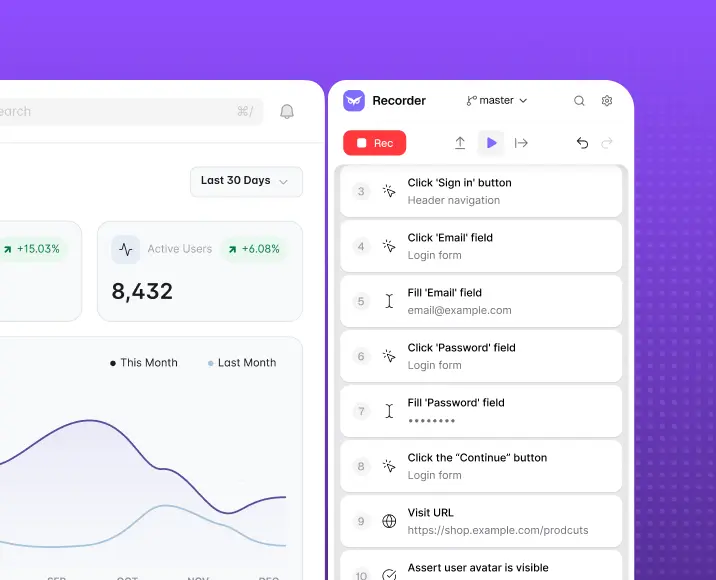
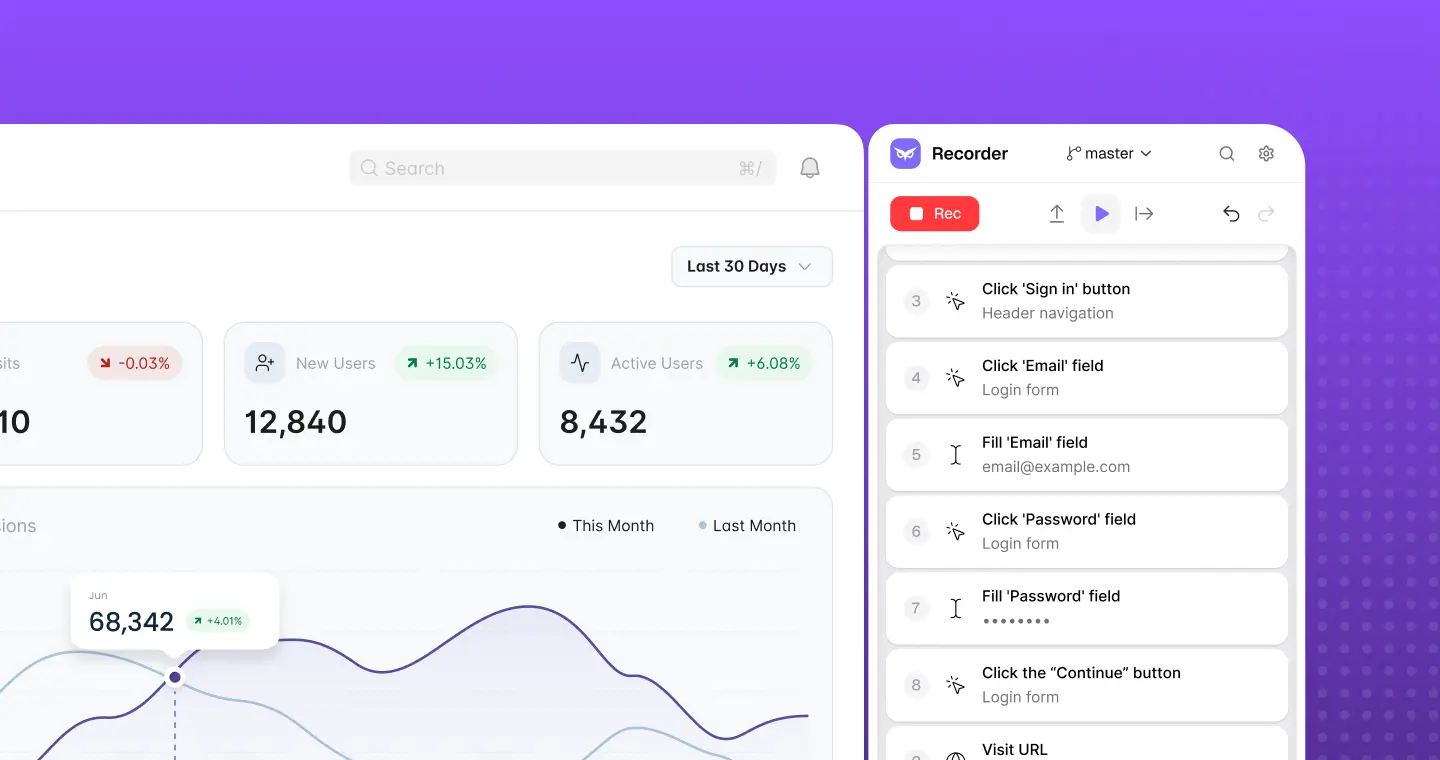
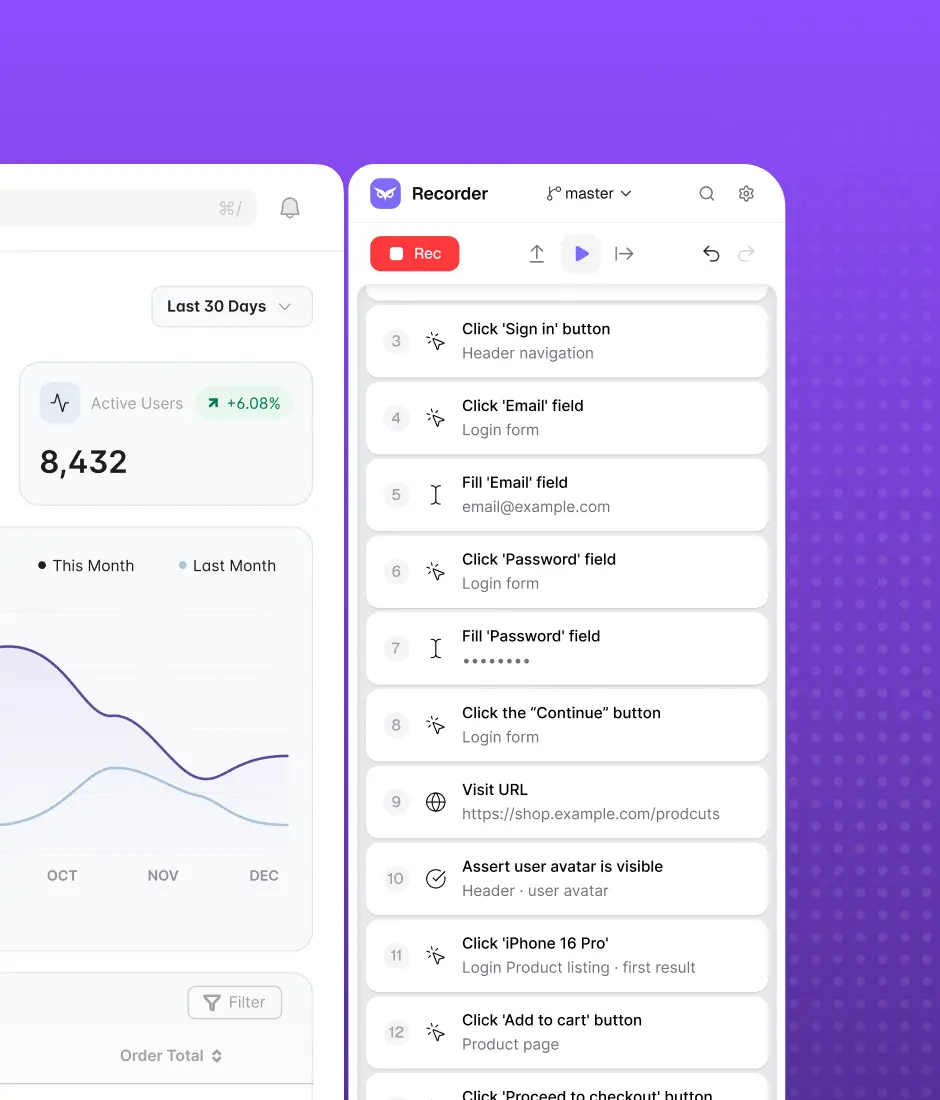
We designed OwlityAI to strike multiple birds with one tool. Apart from just catching bugs, it helps to prevent QA debt from accumulating. Working with debt roots makes tests adaptive, coverage intelligent, and maintenance nearly invisible.
How OwlityAI prevents QA automation debt from compounding:
Auto-generates and maintains tests: The tool analyzes code changes and real-world usage patterns and proposes relevant, high-value test cases. Avoid duplicated or outdated tests that bloat your suite.
Self-heals tests to reduce manual updates: It dynamically adapts locators and test steps when the app UI changes, avoiding the “script rot” that usually spikes after releases. Teams spend less time firefighting broken tests and more time honing strategy.
Surfaces flaky tests and coverage gaps: It is not okay to cut corners. As well as overloading teams. OwlityAI makes this cultural issue visible and keeps your team from normalizing flakiness.
Bottom line
Tech debt is the poison of modern software testing. Despite some IT companies stating that the term is already obsolete, it continues to drain resources, both human and, eventually, financial ones.
In this light, an AI-led QA strategy is the solution, but not a silver bullet. Begin with a mind and cultural shift, teach your team to work with modern testing tools, start a measurable pilot, and scale gradually once succeed.
You definitely can reduce QA debt; we know this from our experience with many SMBs and enterprises. If you are not sure where to start, book a free 30-min call with our team or request a demo.
Monthly testing & QA content in your inbox
Get the latest product updates, news, and customer stories delivered directly to your inbox